
Donkey Kong Bananza is coming out very soon for Nintendo Switch 2, however, you might want to catch up on everything Donkey Kong has to offer via Nintendo Classics. Today I’m going to check out the history of Donkey Kong on the NES, Super Nintendo and Gameboy as we wait for the release of Donkey Kong Bananza.
Without further delay let’s dive into Donkey Kong games available on Nintendo Classics.
Donkey Kong (NES)
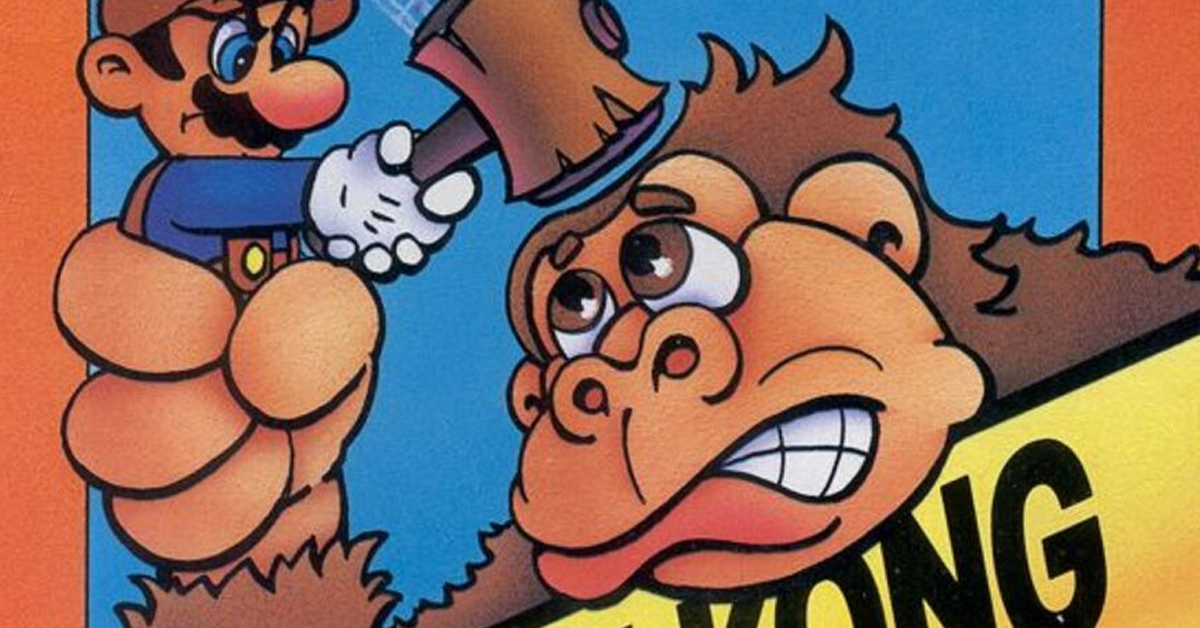
Donkey Kong is a classic arcade platform game released by Nintendo in 1981. In the game, players control Mario—then known as “Jumpman”—as he climbs ladders and jumps over obstacles to rescue a damsel named Pauline from a giant ape, Donkey Kong. This marked Mario’s first appearance in a video game and kicked off both the Donkey Kong and Mario franchises.
The game was born out of a need to repurpose unsold arcade machines after Nintendo’s previous game, Radar Scope, flopped. Nintendo president Hiroshi Yamauchi handed the project to a young and unproven designer named Shigeru Miyamoto. Drawing inspiration from King Kong, Popeye, and even Beauty and the Beast, Miyamoto created a game that was groundbreaking for its time. Alongside engineer Gunpei Yokoi, he introduced storytelling through cutscenes, distinct levels, and characters with personality—unusual for early arcade games.
Donkey Kong was revolutionary. It’s considered the first platformer, introducing the idea of jumping between platforms—something that became a core mechanic in countless future games. It also helped define the “damsel in distress” trope in gaming.
When released, Donkey Kong became an instant hit, topping arcade charts in 1981 and 1982. It was ported to various systems, including Game & Watch and ColecoVision, selling millions of units. Its NES version was especially influential in expanding Japanese games to Western markets.
Universal Studios even sued Nintendo, claiming it infringed on King Kong—a lawsuit Nintendo famously won.
In the end, Donkey Kong didn’t just save Nintendo—it helped shape the video game industry. It made Mario a global icon and remains one of the most important and beloved games from the golden age of arcades.
Donkey Kong Jr (NES)
Donkey Kong Jr. is a platform arcade game released by Nintendo in 1982. As the direct sequel to Donkey Kong, it features a twist on the original storyline: this time, Mario takes on the role of the antagonist, while players control Donkey Kong Jr., who must rescue his captured father. Initially launched in arcades, the game was later adapted for numerous home systems throughout the 1980s. In the North American arcade release and many non-Nintendo ports, the title appears as Donkey Kong Junior.
The game was primarily designed by Shigeru Miyamoto, with significant contributions from Gunpei Yokoi, Nintendo’s chief engineer. Miyamoto also worked on the game’s visuals alongside Yoshio Sakamoto. The soundtrack, as with the original Donkey Kong, was composed by Yukio Kaneoka.
Donkey Kong 3 (NES)
Donkey Kong 3 is a 1983 shoot ’em up arcade game developed and published by Nintendo. Serving as the third entry in the Donkey Kong series, it marked a notable shift in gameplay from its predecessors. Rather than featuring Mario, the game introduces a new protagonist—Stanley, a bug exterminator tasked with driving Donkey Kong away using insect repellent. It debuted in arcades worldwide in 1983, followed by a release on the Family Computer in 1984, and later on the Nintendo Entertainment System in North America in 1986.
While the game saw modest success in Japan, it underperformed commercially in the United States, leading to a hiatus in the Donkey Kong franchise until the releases of Donkey Kong (1994) and Donkey Kong Country.
Donkey Kong Jr. Math (NES)
Donkey Kong Jr. Math is an educational platform game released by Nintendo for the NES. A spin-off of Donkey Kong Jr., it features Donkey Kong Jr. solving math problems created by his father, Donkey Kong. The game first launched in Japan in 1983 and came to North America and Europe in 1986.
It’s notable as the only title in the NES Education Series released in North America, mainly because it didn’t do well commercially or critically. Over the years, it was re-released in games like Animal Crossing for the GameCube and on Virtual Console platforms for the Wii, Wii U, and again in 2024 for the Nintendo Classics service.
Despite Nintendo’s effort to blend learning with gameplay, Donkey Kong Jr. Math was widely criticized. Outlets like IGN labeled it one of the worst Virtual Console games, citing dull gameplay and lack of educational value.
Donkey Kong Country (Super Nintendo)
Donkey Kong Country, known as Super Donkey Kong in Japan, is a 1994 platform game developed by Rare and published by Nintendo for the Super Nintendo Entertainment System, or SNES. The game reboots the classic Donkey Kong franchise and follows Donkey Kong and his nephew Diddy Kong as they journey through the jungle to recover their stolen banana hoard from the villainous King K. Rool and his army, the Kremlings.
Players explore 40 side-scrolling levels filled with platforming challenges, enemies, minecart rides, animal companions, and hidden bonus stages. The game also features multiplayer modes, allowing two players to either work together or compete.
The British studio Rare, founded by Tim and Chris Stamper, had previously developed NES games in the 1980s. In the early ’90s, Rare invested in Silicon Graphics technology to create high-end 3D models. Impressed by their work, Nintendo partnered with Rare to bring Donkey Kong back to life, hoping to rival games like Sega’s Aladdin. A small team of 12 developers worked on Donkey Kong Country over 18 months.
The game broke new ground with its pre-rendered graphics, which turned 3D models into 2D sprites with unprecedented detail on a home console. Though the original creator Shigeru Miyamoto wasn’t leading the project, he did contribute some design ideas.
When it was unveiled at the 1994 Consumer Electronics Show, excitement was sky-high. Nintendo launched a $16 million marketing campaign in North America alone. Upon release in November 1994, the game was met with critical acclaim. Reviewers praised its visuals, gameplay, and music, often comparing it favorably to the Super Mario series.
Selling over 9 million copies, Donkey Kong Country became the third-bestselling SNES game ever and helped solidify the SNES’s success during a competitive era. It also reestablished Donkey Kong as a major Nintendo franchise.
Donkey Kong Country 2: Diddy’s Kong Quest (Super Nintendo)
Donkey Kong Country 2: Diddy’s Kong Quest is a 1995 platform game developed by Rare and published by Nintendo for the Super Nintendo. It’s the second game in the Donkey Kong Country series and a direct sequel to the original.
This time, players control Diddy Kong and his girlfriend Dixie Kong as they set out to rescue Donkey Kong, who’s been kidnapped by the evil King K. Rool. The adventure takes place on Crocodile Isle and spans eight worlds with a total of 52 levels, each packed with challenges, secrets, and unique environments.
The game used the same cutting-edge pre-rendered 3D graphics technology that made the original stand out, giving it a visually rich look on the SNES.
Upon release in late 1995, the game received widespread critical acclaim. It was especially praised for its visuals, tight gameplay, and memorable soundtrack. It became the second best-selling game of the year and is still considered one of the greatest 2D platformers ever made.
It was later re-released for the Game Boy Advance in 2004 and made available on the Wii and Wii U Virtual Console platforms. A follow-up, Donkey Kong Country 3: Dixie Kong’s Double Trouble!, came out in 1996.
Donkey Kong Country 3: Dixie Kong’s Double Trouble! (Super Nintendo)
Donkey Kong Country 3: Dixie Kong’s Double Trouble! is a platform game released in 1996 for the Super Nintendo, developed by Rare and published by Nintendo. It’s the third entry in the Donkey Kong Country series, following Diddy’s Kong Quest.
This time, players take on the roles of Dixie Kong and her cousin Kiddy Kong as they set out to rescue Donkey Kong and Diddy Kong, who’ve been kidnapped by the villain King K. Rool. The adventure takes place in the Northern Kremisphere, a fictional region inspired by northern Europe and Canada.
Like its predecessors, the game uses pre-rendered 3D graphics created with Silicon Graphics technology, giving it a polished and detailed look for its time.
The game was released in November 1996 across North America and Japan, and shortly after in Europe and Australia. It was later re-released for the Game Boy Advance in 2005, and made available on the Wii and Wii U Virtual Console platforms in 2007 and 2014.
Upon release, it received positive reviews, with critics praising its graphics and gameplay, though some noted it didn’t feel as fresh or innovative as the previous titles.
Donkey Kong Land (Gameboy)
Donkey Kong Land, known in Japan as Super Donkey Kong GB, is a 1995 platform game developed by Rare and published by Nintendo for the Game Boy. It adapts the gameplay of Donkey Kong Country for handheld play, but with new level designs and bosses. Players control Donkey Kong and Diddy Kong as they travel through 30 levels to reclaim their stolen bananas from King K. Rool.
Development began in 1994, even before Donkey Kong Country was finished. Programmer Paul Machacek pushed to make Land an original title rather than a direct port, and Rare adjusted the visuals and gameplay to fit the Game Boy’s limitations. Like Country, it used pre-rendered graphics and a compressed sprite-based system, with music adapted by David Wise and Graeme Norgate for the Game Boy’s sound chip.
Released in mid-1995, Donkey Kong Land sold nearly 4 million copies and received positive reviews for capturing the spirit of Country on a smaller screen. It led to two sequels—Donkey Kong Land 2 and 3—and was later re-released on the 3DS in 2014 and the Nintendo Switch in 2024.
Donkey Kong Land 2 (Gameboy)
Donkey Kong Land 2 is a platform game developed by Rare and published by Nintendo for the Game Boy, released in late 1996. It’s the direct sequel to the original Donkey Kong Land and part of the larger Donkey Kong series.
The game closely follows the story and style of Donkey Kong Country 2, with Diddy Kong and Dixie Kong teaming up once again. It was designed for the Super Game Boy, adding color enhancements and a custom banana-themed border on TV screens. Like its predecessor, it came in a distinctive banana-yellow cartridge.
Donkey Kong Land 2 was well received and led to a third entry, Donkey Kong Land III, released in 1997. The game has since been re-released on the Nintendo 3DS Virtual Console and added to the Nintendo Classics service, bringing it to a new generation of players.
Donkey Kong Land III (Gameboy)
Donkey Kong Land III is a 1997 platform game developed by Rare and published by Nintendo for the Game Boy. Like the previous Land titles, it acts as a portable follow-up to its SNES counterpart—in this case, Donkey Kong Country 3: Dixie Kong’s Double Trouble!.
Players once again join Dixie Kong, now teamed up with Kiddy Kong, for another side-scrolling adventure. The game was enhanced for the Super Game Boy, offering color accents and a custom border when played on a TV, and came in the signature banana-yellow cartridge.
A special Game Boy Color version was released in Japan only in 2000, titled Donkey Kong GB: Dinky Kong & Dixie Kong.
Donkey Kong Land III was re-released on the Nintendo 3DS Virtual Console in 2014, and joined the Nintendo Classics service in December 2024, following the re-releases of the first two Land games.
Donkey Kong Country Tropical Freeze (Nintendo Switch)
Donkey Kong Country: Tropical Freeze is a 2014 platformer developed by Retro Studios and published by Nintendo for the Wii U. It’s the fifth game in the Donkey Kong Country series and a direct sequel to Donkey Kong Country Returns from 2010. An enhanced version of the game was later released for the Nintendo Switch in May 2018.
The story begins on Donkey Kong’s birthday, when a group of icy invaders called the Snowmads freeze over Donkey Kong Island. Donkey Kong and his family must travel across five unique islands to reclaim their home.
Like its predecessor, the game was well-received. Critics praised its creative level design, tight gameplay mechanics, and soundtrack, though some found the game’s difficulty level to be a bit steep.
Donkey Kong Country Returns HD (Nintendo Switch)
Donkey Kong Country Returns is a 2010 platformer developed by Retro Studios for the Wii. In the game, Donkey Kong and Diddy Kong set out to reclaim their stolen bananas from the Tiki Tak Tribe, who have hypnotized island animals to do their bidding.
It was the first Donkey Kong Country game not developed by Rare and the first after Rare was acquired by Microsoft. The game was a critical and commercial success, selling over 6.5 million copies. Critics praised its visuals, level design, and gameplay, though motion controls and difficulty got mixed reactions.
A 3DS port called Donkey Kong Country Returns 3D launched in 2013, and a HD version for Nintendo Switch titled Donkey Kong Country Returns HD was released in January 2025. Its sequel, Tropical Freeze, followed in 2014.
Mario vs Donkey Kong (Nintendo Switch)
Mario vs. Donkey Kong is a 2004 puzzle-platform game for the Game Boy Advance, developed by Nintendo Software Technology. It’s a spiritual successor to the 1994 Donkey Kong game.
Players control Mario as he solves puzzles and platform challenges to find keys and rescue Mini-Marios from Donkey Kong. The game was praised for its gameplay and graphics.
It launched a series, with the sequel Mario vs. Donkey Kong 2: March of the Minis released on Nintendo DS in 2006. A remake for the Nintendo Switch came out in February 2024.
Let me know waht you think in the comments.
Leave a Reply