
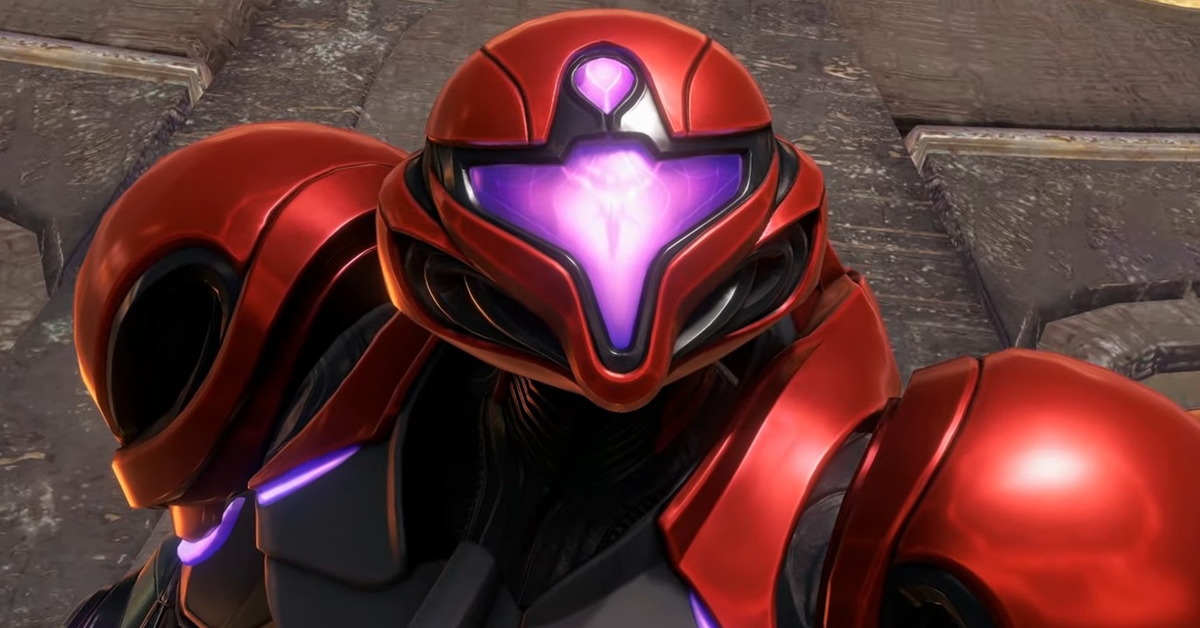
Seven years of waiting, two console generations, and a mountain of hype — Metroid Prime 4 Beyond is finally here. But after delays, a full reboot, and sky-high expectations built on the legacy of Prime, the reviews tell a very different story. This is the moment we put fantasy and reality side by side to see what Metroid Prime 4 really delivered.
THE MYTH & THE HYPE
For years, Metroid Prime 4 wasn’t just a game announcement — it became a myth. Back in 2017, a simple title card was enough to send the entire Nintendo community into a frenzy. No gameplay, no trailer, no details. Just the promise that Samus Aran was returning to the Prime series for the first time in over a decade. That alone was enough to spark theories, hype videos, and expectations that grew larger with every year of silence.
Then came the reboot. Nintendo confirmed that development had been restarted from scratch and handed to Retro Studios, the team behind the original trilogy. That single moment instantly rewired fan expectations. If the people who created Metroid Prime were back in charge, surely this would be the ultimate return — the definitive sequel, the modern masterpiece fans had been dreaming about. Each delay, instead of killing excitement, only made people believe the game was being polished into something incredible.
Meanwhile, the legacy of the series loomed overhead. The original Prime games weren’t just good; they were generational landmarks, with Metacritic scores in the 90s and a lasting reputation as some of Nintendo’s finest work. Fans didn’t just want Metroid Prime 4 to be great — they needed it to live up to a legacy almost impossible to top. After seven years of imagining the perfect Prime experience, the expectations weren’t just high. They were astronomical.
EXPECTATIONS: WHAT FANS THOUGHT WE’D GET
After seven years of anticipation, fans had built a crystal-clear vision of what Metroid Prime 4 had to be. At the top of that list was gameplay evolution — a bold, modern take on the classic Prime formula. Many expected expansive, interconnected environments that pushed exploration further than ever. With new hardware on the horizon, players pictured a game that felt fluid, fast, and technically impressive, combining the atmospheric tension of the originals with the freedom and scale of a next-gen sci-fi adventure.
But it wasn’t just about gameplay. The long wait had people imagining a major narrative leap, something darker and more ambitious than anything the series had attempted before. Fans hoped for a return to true isolation, the feeling of being alone on an alien world with nothing but Samus’ visor and the echoes of a forgotten civilization. They expected a story that picked up threads from Prime 3, offered deeper lore, and delivered emotional weight — all while keeping the intrusive NPCs and chatter that define other modern games far, far away.
And then there was the expectation of sheer production value. With Retro Studios at the helm again, many fans believed Prime 4 would become Nintendo’s big sci-fi showcase — a technical powerhouse with massive biomes, unforgettable boss encounters, and visuals that pushed the Switch 2 to its limits. For some, this wasn’t just supposed to be a great Metroid game. It was supposed to be the next defining moment for Nintendo, a game that would stand shoulder-to-shoulder with the heavy hitters of the modern industry. In the minds of fans, Prime 4 wasn’t just a sequel; it was a comeback event.
REALITY: WHAT WE ACTUALLY GOT
When players finally stepped into Metroid Prime 4 Beyond, the first thing that became clear was how closely the game holds to the classic Prime identity. The scanning, the combat rhythm, the environmental puzzles — it all feels unmistakably familiar, almost preserved in amber. There are new ideas, like psychic abilities and expanded traversal options, but their impact varies. Some additions feel inventive, while others feel like attempts to modernize the formula without fully committing. And then there’s the open desert hub world, which quickly became one of the most divisive design choices: ambitious in concept, but often criticised as empty, repetitive, or lacking the tight environmental flow that defined earlier entries.
Narratively, the reality also lands in a different place than fans expected. Instead of the stark isolation that made Prime iconic, Beyond introduces more NPC involvement and structured storytelling. For some players, these touches help evolve the world and ground Samus’ journey. For others, they break the tension and atmosphere that the series is known for. Pacing issues emerge early, with plot beats that don’t always align smoothly with exploration, and moments where dialogue interrupts the sense of solitude the franchise builds its identity on. It’s not that the story is bad — it’s just not the kind of story many fans imagined during seven years of buildup.
Visually and technically, the game delivers high production values, but not the generational spectacle many expected. The art direction is strong, with striking biomes, moody lighting, and a soundtrack that channels Prime’s best atmospheric moments. But the dual launch on Switch and Switch 2 means the game straddles a technical line, never fully embracing the power of newer hardware. Performance is solid, but rarely breathtaking. And when the reviews landed, the Metacritic score of 81 — far below the franchise’s historic highs — became the clearest indicator of reality. Despite strong moments, Metroid Prime 4 Beyond isn’t the flawless, era-defining masterpiece fans created in their imaginations. It’s a good game with bold ideas, noticeable flaws, and the weight of impossible expectations on its shoulders.
WHY THE GAP EXISTS: THE PSYCHOLOGY OF WAITING
A seven-year wait doesn’t just build anticipation — it reshapes it. The longer Metroid Prime 4 stayed out of sight, the more the community filled that silence with imagination. Fans projected their own ideal version of the game into a void of uncertainty, creating a mental image no development team could ever fully match. In that sense, Prime 4 was competing not against its predecessors, but against a fantasy constructed over nearly a decade. When a game becomes a myth, the reality — even a good one — can feel smaller by comparison.
Nostalgia amplified this effect. The original Metroid Prime games weren’t just excellent; they arrived at a formative time for many players. Over years, their strengths became legendary and their weaknesses faded away, leaving behind a polished collective memory. So expectations for Prime 4 weren’t based on the actual games from the early 2000s, but on an idealized version of them. Any modern sequel, no matter how well-crafted, was stepping into the shadow of something players remember as perfect.
And then there’s the development journey itself. The reboot at Retro Studios created an assumption of increased ambition — that extra time must mean extra quality. But long development doesn’t always equal a larger scale; sometimes it simply means restarting, refining, or wrestling with shifting hardware targets. By the time Prime 4 arrived, expectations had stretched far beyond what any realistic project scope could deliver. The gap between expectation and reality isn’t really the fault of the game — it’s the natural outcome of years of hype, silence, nostalgia, and hope intertwining into something no finished product could ever fully embody.
WAS IT WORTH THE WAIT?
So after seven years, was Metroid Prime 4 Beyond worth it? The answer depends on what you hoped for. As a pure Metroid Prime experience, the game absolutely delivers moments of brilliance — the atmospheric environments, the sense of discovery, the slow, methodical exploration that defined the original trilogy. When Beyond leans into what Retro Studios does best, it’s a reminder of why this series earned its legendary reputation in the first place. For longtime fans, those flashes of classic Prime magic might be worth the wait on their own.
But judged as the generational leap many imagined, Prime 4 inevitably falls short. The game doesn’t redefine the franchise or reinvent first-person exploration in the way fans envisioned during the long silence. It doesn’t carry the sense of monumental ambition that some expected from a seven-year journey. Instead, it feels like a strong, sometimes bold, but ultimately safe continuation of the Prime formula — a game that succeeds on familiar ground rather than breaking new one. For players who expected a masterpiece to match the myth, this will feel like a compromise.
In the end, Metroid Prime 4 Beyond sits in an interesting place. It’s a very good game released under impossible pressure, a sequel that had to satisfy nostalgia, survive a reboot, and speak to two different generations of hardware at once. It might not be the transformative sci-fi epic fans dreamed of, but it is a confident return to a world and style that many thought Nintendo had left behind. Whether that’s “worth the wait” comes down to how much value you place on a series staying true to itself — even when reality doesn’t quite match the fantasy we spent seven years constructing.
THE FUTURE OF METROID
Now that Metroid Prime 4 Beyond is finally real, the biggest question becomes: where does the series go from here? In some ways, this release feels like the end of one era and the start of another. The Prime formula still works, but Beyond shows the tension between staying faithful to the past and adapting to modern expectations. The game flirts with new ideas — larger exploration spaces, more narrative structure, expanded abilities — but never fully commits to a new identity. That leaves Nintendo and Retro Studios at a crossroads: do they double down on tradition, or use this foundation as a springboard into something more transformative?
What’s clear is that Metroid as a franchise still carries enormous potential. Even with mixed reactions, players are excited to return to Samus’ world, dissect the lore, and explore every corner of the map. Beyond proves there is still a hunger for atmospheric sci-fi adventures that don’t follow mainstream trends. And with more powerful hardware now in players’ hands, future entries could finally take the risks Prime 4 couldn’t — whether that means more open-ended worlds, deeper storytelling, or entirely new mechanics that redefine what a Metroid game can be.
Ultimately, Prime 4’s legacy may not be determined by its Metacritic score or how closely it matched fan expectations, but by what it unlocks next. If this game becomes the stepping stone to a more ambitious Prime 5 — or even a new direction entirely — then Beyond might be remembered not as the end of a long wait, but as the start of a new chapter. And after nearly two decades without a major Prime sequel, the idea that Samus could be heading toward something bigger is the most exciting possibility of all.
Metroid Prime 4 Beyond is a rare kind of release — a game that carries the weight of an entire generation’s hopes on its shoulders. It didn’t arrive into a vacuum; it arrived into a landscape shaped by silence, speculation, and memories of one of Nintendo’s most iconic trilogies. And while the final product doesn’t rewrite the rulebook or reinvent the franchise, it still manages to capture the unmistakable soul of Metroid Prime. In its best moments, Beyond feels like stepping back into a world we thought we might never return to.
But it’s also a reminder of how expectation can shape reality. The game we imagined over seven years was bigger, bolder, and maybe impossible to achieve. That doesn’t make Beyond a failure — it makes it a victim of its own mythology. When you strip away the weight of hype, what’s left is a strong, atmospheric, thoughtfully designed Metroid game that succeeds more often than it stumbles. The disconnect lies not in its quality, but in the fantasy it was forced to compete with.
And now that the wait is finally over, we can stop treating Metroid Prime 4 as a legend and start treating it as what it truly is: a foundation. A stepping stone. A signal that Metroid still matters, still has stories to tell, and still has room to grow. Whether you loved it, felt mixed, or were hoping for something more, one thing is certain — the series is alive again. And for the first time in a very long time, the future of Metroid feels open, uncertain, and full of potential.
Leave a Reply