
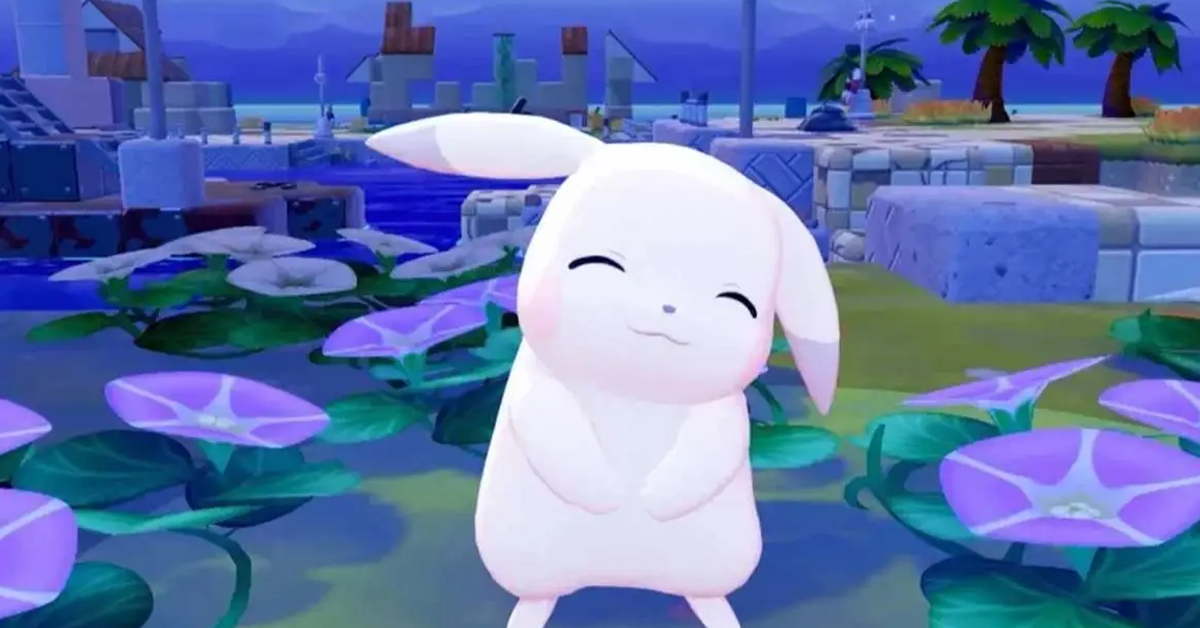
Pokémon Pokopia was already shaping up to be one of the year’s most interesting games. Its persistent Minecraft-style servers, cosy ecosystem simulator, and core multiplayer features had people curious. Now, there’s even more reason to pay attention: some of the main creators behind Dragon Quest Builders 2 joined the project after seeing Game Freak’s early prototype.
This points to something bigger. The Builders team is known for blending crafting, simulation, and open-ended play better than most Japanese game developers. Combined with Pokémon’s creature design, this partnership could be a game-changer.
Today, I’ll look at Pokopia’s 20-year-old concept, its persistent servers, and why teaming up with the Dragon Quest Builders creators might be its real secret weapon.
A 20-Year Idea That Finally Became Reality
Pokopia’s story doesn’t start in 2026. It goes back more than twenty years. While working on Pokémon Ruby and Sapphire, Shigeru Ohmori became very interested in environmental design, especially how grass and plants were placed in the game world. This focus on ecological detail led him to think bigger. Rather than just making paths for players, he started imagining a world that felt alive for Pokémon, too.
That idea developed over the years. The goal wasn’t to catch Pokémon or battle gyms, but to create a habitat for Pokémon—a world shaped by players that encourages creativity instead of competition. It took more than twenty years for this idea to come together. Ohmori eventually made a prototype and a promotional video that captured his vision, which led Game Freak to turn it into a full-scale project.
Minecraft-Style Persistent Servers: A Structural Shift
Director Takuto Edagawa confirmed that Pokopia will use persistent cloud servers inspired by Minecraft. Shared worlds will stay active even when the host logs off. Your base, your shared ranch, and the ecosystem will all keep going.
In the past, multiplayer was just an add-on to single-player games. Trading, battling, and raiding dens were short connections, not the main focus. With persistent servers, multiplayer is now at the heart of the game.
When the world keeps going without you, your actions have a lasting impact. If you build a habitat, it stays. If your friends expand the settlement, you come back to something different. This setup encourages teamwork, responsibility, and creativity in ways that traditional co-op games don’t.
It also adds more social depth. Friends can take on different roles, like balancing the ecosystem, building, or searching for rare Pokémon. This kind of teamwork works best when the world is always active.
Enter Dragon Quest Builders 2: Crafting Expertise Joins the Project
According to Famitsu, producer Kanako Murata said Omega Force, a Koei Tecmo studio, joined after key Dragon Quest Builders 2 creators saw Ohmori’s prototype. They were impressed by the vision and wanted to contribute.
Dragon Quest Builders 2 is seen as one of the best crafting and life-sim games. It balances set goals with open building, makes farming feel important, and has NPCs that respond to what you build. Town layouts change how characters behave, and the game’s systems work together in meaningful ways.
That kind of experience is exactly what Pokémon needs to bring Pokopia’s vision to life. In a sandbox game, it’s not just about placing blocks. Every system should feel natural and rewarding.
Even better, the teams spent three to four months working together to solve problems before full development began. This shows real teamwork from the start. Rather than bringing in outside help at the last minute, Game Freak and Omega Force shaped the game’s identity together from the beginning.
Having a strong foundation like this often separates ambitious projects that succeed from those that fall apart.
A New Identity for Pokémon
Pokémon has always been about connection, but it was usually through competition or trading. You traded to complete your Pokédex and battled to prove your strength. Even in open-world games, the experience was still mostly personal.
Pokopia changes that focus. With persistent worlds and players shaping habitats together, the emphasis moves from solo progress to community progress. The world itself becomes the main story, always evolving.
This leads to lasting engagement, which is rare in older Pokémon games. Imagine friends building special areas for certain Pokémon, content creators leading their own communities, and friendly rivalries between groups. This isn’t the usual linear Pokémon adventure—it’s Pokémon as a living, shared world.
If the game is well-supported, with stable servers, good moderation tools, and easy-to-use systems, it could change how Pokémon approaches multiplayer in the future.
What Exactly Is Pokémon Pokopia?
If you’re just catching up, Pokémon Pokopia isn’t a traditional mainline game. It’s a creative sim set in the Pokémon universe. Instead of aiming to become a Champion, you’ll build habitats, shape environments, and create spaces where Pokémon can thrive. The focus moves from battling to nurturing, from conquering routes to designing worlds.
This makes Pokopia one of the most unique Pokémon releases in years. It focuses on creativity, collaboration, and long-term world-building instead of gym progression or competitive play.
Pokémon has tried open worlds and multiplayer before, but Pokopia’s changes go deeper than just looks. Persistent servers mean your world doesn’t reset. Crafting systems add real depth. And shaping ecosystems for Pokémon, instead of just collecting them, is something fans have wanted for years.
Timing also plays a role. After decades of mostly battle-focused games, many players have been looking for a calmer, more creative Pokémon experience—something like a life sim, something cosy and social. Pokopia seems to be answering that demand.
Pokémon Pokopia comes out on March 5th for Nintendo Switch 2, and that date now feels more important than it did just a few weeks ago. With persistent online worlds, cross-player collaboration, and experienced crafting developers on board, expectations are rising fast.
The Big Question: Is This the Future?
Pokopia stands out because of its purpose. It’s a decades-old idea finally brought to life, with outside experts inspired by the vision. Persistent servers are designed for long-term play, and design challenges were tackled early on.
If Pokopia launches successfully on March 5th, it could be a turning point. Future Pokémon games might focus on persistent worlds, with multiplayer and creative systems at their core. If these changes stick, Pokopia could be remembered as more than just a spin-off—it might be the moment Pokémon moved beyond classic adventures and started building entire worlds.
Pokopia’s real secret weapon is the mix of a long-developed vision and the skills of experienced creators coming together at the perfect moment. When proven experts join a project and persistent worlds change how Pokémon is experienced, both the stakes and the possibilities grow.
Now, all that’s left is to see if Pokopia can deliver on its big promise.
If Pokopia succeeds, it could set a new standard for future Pokémon games.
Leave a Reply