
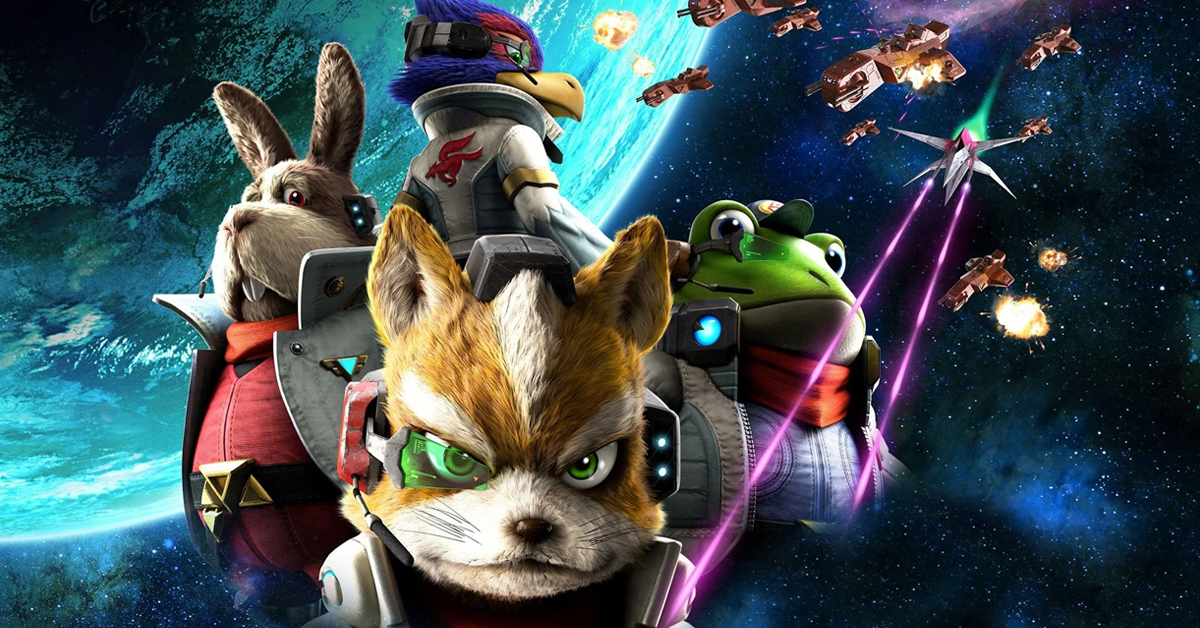
Star Fox launched on Switch 2 less than a month ago. Last week, in the UK, it sold roughly a thousand physical copies. Total. Across the entire country. In one week. A decade ago, a single GAME store could move a hundred copies of a new release in a single day. Now the whole nation barely clears that in seven.
That’s not a Nintendo problem specifically. It’s the entire physical games industry, laid bare in one number. And this month, we got a lot more numbers like it. Sony has confirmed it’s walking away from physical media entirely. The weekly PS5 sales charts are almost too bleak to believe. And yet, somehow, buried in the same data, Nintendo just posted its best physical showing in seventeen years.
So let’s actually go through what’s confirmed, what’s speculation, and what it means for the only platform holder still betting on physical games.
The Number Everyone’s Celebrating
This chart is the one doing the rounds. It’s Circana’s US physical software spending data, tracked every year back to 2007. In 2009, the format peaked at 11.5 billion dollars. Since then it’s been almost a straight line down, year after year, for seventeen straight years. By 2025 it had collapsed to roughly 1.5 billion.
Then 2026 happened. Spending ticked up 3 percent, to 1.6 billion dollars. It’s the first year-on-year increase since 2009. And according to Circana’s Mat Piscatella, the reason is simple: Switch 2. Nintendo’s physical software sales are up around 26 percent year-on-year, enough on its own to nudge the entire industry’s number back into positive territory.
Worth being precise about what this chart actually shows, though. It’s total physical spending across every console platform combined, not a Nintendo-only figure. Nintendo didn’t grow the market. Nintendo’s growth was large enough to briefly outweigh everyone else’s decline.
How Bad Is Everyone Else, Really?
This is where it gets genuinely stark. In the week ending July 11th, only two PS5 games sold more than 10,000 physical copies in the entire US. Year-to-date, only seven PS5 titles have crossed 100,000 physical copies sold, total.
And that Star Fox number isn’t an isolated embarrassment either. Games industry analyst Christopher Dring pointed out that just 1,000 physical sales would have been enough to land the number nine spot on last week’s UK chart. Number ten was Star Fox. Number nine was Pokémon Legends Z-A, split roughly 60/40 between Switch 2 and original Switch. A chart position that used to require tens of thousands of units now takes four figures, sometimes barely that.
Sony Just Confirmed Which Way This Is Going
Sony announced it will end physical disc production for PlayStation games from January 2028, covering PS5 and presumably PS6. Existing releases aren’t affected, but from that date, every new PlayStation game goes digital-only. The backlash from fans was immediate and it hasn’t let up.
Given the sales numbers above, the announcement isn’t really surprising. It’s closer to Sony simply confirming what the data has been saying for a while. Xbox is heading the same direction with its next console, reportedly codenamed Project Helix and expected in late 2027, also dropping the disc drive entirely.
Why Is Nintendo Still Doing This?
Piscatella was asked directly whether Sony’s move changes anything for Nintendo. His answer was blunt: Nintendo does what Nintendo wants to do, regardless of what Sony or Microsoft decide. As he put it, “Nintendo is going to be Nintendo, for better and/or worse.”
There’s substance behind that independence. Piscatella noted that the retail sector continues to actively support Nintendo, that Nintendo holds a very strong share of physical software and hardware sales since Switch 2 launched, and that share could keep growing. Nintendo’s been backing that up at retail directly too, setting up in-store kiosks in North America running playable demos, like Splatoon Raiders, specifically to drive foot traffic and sales for the new system.
But Piscatella also added the caveat that matters most: he expects this growth “won’t last.” Physical sales have fallen every year since the late 2000s, and one strong launch year doesn’t undo a seventeen-year trend. This is a Switch 2 honeymoon period, not a reversal.
Nintendo’s “Physical” Isn’t Fully Physical Anymore, Either
Here’s the detail most coverage of this story skips. Nintendo’s own definition of “physical” has already started shifting. The Switch 2 generation introduced Game-Key Cards: cartridges you insert like any other game, except the cartridge itself doesn’t contain the game. It’s a physical key that triggers a mandatory download before you can actually play.
You’re holding a cartridge. You’re not really holding the game. It’s Nintendo quietly hedging, keeping the retail experience and the box on the shelf, while shifting the actual product itself closer to digital distribution. It lets Nintendo keep collectors buying physical copies and keep retailers stocked, without the same manufacturing and logistics commitment as a true full-data cartridge.
The Reputation Nintendo Didn’t Have To Earn
There’s a second story running alongside all of this that has nothing to do with sales charts. In the same window as Sony’s disc announcement, Sony also confirmed it’s delisting over 500 films from the PlayStation Store with no refunds, adding fuel to an already bad news cycle. Microsoft, meanwhile, has been cutting deep: 292 full-time staff let go at Bungie, and a further 1,600 Xbox job losses confirmed, with another 1,600 expected before the fiscal year is out, on top of what was already a brutal 2025 for the company.
Set against that, Nintendo spent the same summer quietly shipping Fitness Boxing 3, Rhythm Heaven Groove, and Star Fox. Low-key, drama-free releases. And it’s had a real effect: Nintendo is increasingly being read as the comparatively responsible platform holder, less by doing anything dramatically different, and more by simply not being the company making headlines for the wrong reasons.
That framing has some real backing behind it. In a recent investor Q&A, Nintendo president Shuntaro Furukawa was asked about how the company develops talent, and pointed to a long-standing internal philosophy built around giving employees room to grow without fear of failure, alongside two rounds of base salary increases in the last three years. It echoes comments Satoru Iwata made back in the Wii U’s rougher years, when he argued that cutting staff for short-term financial optics would do more long-term damage to Nintendo than the savings were worth.
It’s worth being fair here, though. Nintendo isn’t spotless. It’s faced real criticism over the years for aggressive enforcement of its IP, restrictive terms with third parties, contractor labour complaints, and the multi-year Joy-Con drift saga. The “good guy” framing floating around right now is relative, not absolute. It’s Nintendo looking better mostly because the competition is currently doing itself so much damage.
What This Actually Means Going Forward
Put it all together and the honest read is this: physical gaming isn’t just declining anymore, it’s approaching irrelevance everywhere except one platform. Two PS5 games breaking 10,000 units in a week. Four-figure sales landing top ten chart spots in the UK. Seventeen years of decline that one console launch briefly, and probably temporarily, interrupted.
Nintendo’s exceptionalism here is real, but it’s not permanent, and even the analyst behind the numbers doesn’t think it holds. In the meantime, Nintendo’s own version of “physical” is already quietly evolving into something closer to digital, one Game-Key Card at a time. Sony and Microsoft have told you where this ends. Nintendo just isn’t in a hurry to say it out loud yet.
Leave a Reply