
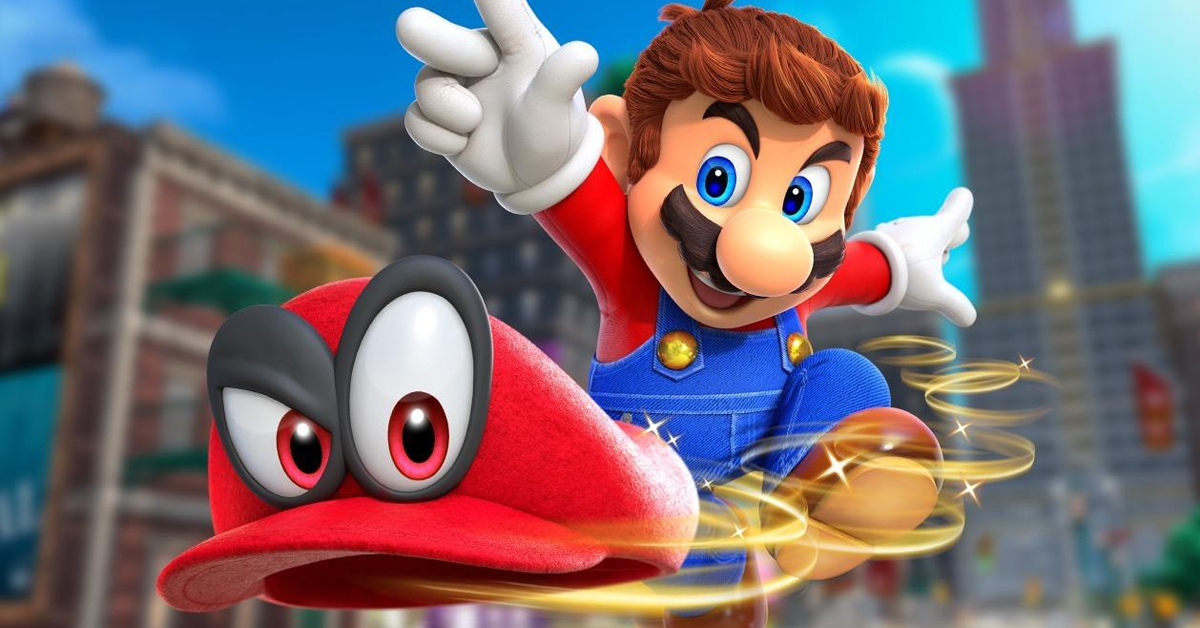
Mario has been jumping for almost forty years — across consoles, generations, and entire eras of gaming history. From the pixel-perfect leaps of Super Mario Bros. to the cinematic spectacle of The Super Mario Bros. Movie, he’s never stopped moving forward. But according to his creators, that’s exactly the point. In a new series of interviews from Nintendo, Shigeru Miyamoto and Takashi Tezuka say that if Mario is to survive another hundred years, he can’t ever stand still. As Tezuka puts it, “He’ll constantly evolve.” It’s a bold statement — and maybe even a challenge. What does it mean for a video game character to outlive his creators? And how do you keep a symbol like Mario fresh in a world that changes faster than ever?
Mario’s 100 year question
When Shigeru Miyamoto and Takashi Tezuka talk about Mario lasting a hundred years, they’re not speaking in metaphors — they mean it. In interviews published alongside the new Nintendo Museum booklet, both creators reflected on how Mario could endure for generations to come. “I believe Mario will be around for a long time to come,” Miyamoto said, adding that his goal has always been to create characters that can outlive the hardware they started on. It’s not just optimism; it’s a deliberate design philosophy. “We don’t make games just for today’s players,” Miyamoto explained. “We make them so that people can continue enjoying them long after we’re gone.”
Tezuka echoed that sentiment but took it one step further. He acknowledged that staying relevant for a century means constant change: “If the series is to maintain its relevance, it will need to keep evolving,” he said. “He’ll constantly evolve.” To Tezuka, Mario’s survival depends on Nintendo’s willingness to reinvent him — not by chasing trends, but by reinterpreting what makes him fun in the first place. Every generation plays differently, he said, and the studio’s challenge is to adapt Mario’s design language so it still sparks curiosity and joy in new players. “Each era has its own sense of what’s fun,” Tezuka explained. “That’s what we have to keep exploring.”
Their words carry a quiet urgency. In an age where digital trends flare and vanish overnight, a hundred years feels impossibly far away. Yet Nintendo’s thinking is refreshingly long-term — almost archival. These interviews were released alongside the opening of the Nintendo Museum in Kyoto, a physical preservation of the company’s creative DNA. Inside, Mario isn’t just a mascot; he’s a legacy in motion, a living artifact of play. The museum contextualizes Mario not as a character of the 1980s, but as a cultural constant — someone who adapts to each new world, whether it’s a cartridge, a movie screen, or a theme park.
But the 100-year question isn’t really about Mario’s brand. It’s about what endures in creative work. Miyamoto and Tezuka both recognize that every new generation of developers will need to reinterpret Mario, just as they once did with Donkey Kong and Super Mario 64. Their hope is that future creators will treat Mario not as a product to preserve, but as an idea to reimagine — a symbol of joy, simplicity, and curiosity. As Miyamoto put it, “We’re not trying to make Mario realistic. We’re trying to make him feel right.” That philosophy — valuing emotion over realism, play over spectacle — may be the key to Mario’s immortality.
And so, the question of whether Mario can reach 100 years becomes a question about Nintendo itself: can it keep evolving without losing its heart? Can it protect that unmistakable sense of fun across generations, cultures, and technologies yet to exist? For Miyamoto and Tezuka, the answer is less about prediction and more about intention. Mario doesn’t need to be eternal. He just needs to keep jumping.
The Secret of Longevity
For Shigeru Miyamoto and Takashi Tezuka, Mario’s ability to endure isn’t built on nostalgia — it’s built on feeling. When Miyamoto talks about Mario, he doesn’t speak in the language of technology or market trends. He speaks about emotion — about joy, surprise, and rhythm. In countless interviews, including these new reflections from the Nintendo Museum booklet, Miyamoto repeats a simple idea: fun comes first. “We make games so that people can enjoy them long after we’re gone,” he says. It’s not about being realistic or impressive. It’s about feeling right. Every Mario jump, every bounce off a Koopa shell, every satisfying “ding” of a coin is part of that pursuit of timeless fun. That’s what keeps Mario alive — not his look, but his movement.
Takashi Tezuka shares that same philosophy, but frames it as an act of renewal. “If the series is to maintain its relevance, it will need to keep evolving,” he says in the recent interviews. To him, evolution isn’t just a business strategy — it’s a creative responsibility. A hundred years from now, the children who meet Mario for the first time won’t be playing the same games, or even using the same devices, but they should still feel that same spark of joy. “Each generation has its own sense of what’s fun,” Tezuka explains. “That’s what we have to keep exploring.” This belief has guided Nintendo for decades: don’t preserve Mario in amber — let him breathe. Let him grow with the people who play him.
What makes this approach so powerful is its humility. Many companies talk about “innovation” as if it’s about bigger graphics, faster processors, or cinematic scope. But for Nintendo, innovation means something much smaller — a tweak to how Mario turns mid-jump, or how his hat moves when he runs. It’s the small, human details that make a world feel alive. Miyamoto once said that his goal was to make players smile in surprise — not to overwhelm them. That same principle still drives Mario today. Each reinvention, from Super Mario 64 to Odyssey to Wonder, isn’t chasing modernity — it’s rediscovering simplicity. The joy of movement, the rhythm of play, the lightness of imagination — these are the things that don’t age.
And perhaps that’s the real secret to longevity: Mario isn’t built to be new — he’s built to be timeless. He belongs to a design philosophy that values intuition over spectacle, curiosity over complexity, and emotion over realism. When Miyamoto says Mario will be around “for a long time to come,” it’s not a prediction — it’s a promise rooted in craft. Because if you can make something that feels good to play, it doesn’t matter whether it’s 1985 or 2085. That’s the power of Mario — he’s not just a hero of his time. He’s a reminder that the purest kind of fun never grows old.
The Many Evolutions of Mario
Across four decades, Mario has reinvented himself more times than almost any other character in gaming. In the ’80s, he defined platforming itself — a simple hero running and jumping through bright, impossible worlds. By 1996, Super Mario 64 transformed that simplicity into a revolution, letting players feel the weight and freedom of movement in 3D for the first time. Super Mario Galaxy turned that same joy of motion into a cosmic ballet, and Odyssey reimagined exploration as pure creative expression. Even Mario Maker handed the reins to the players, turning fans into creators. And now, with Super Mario Bros. Wonder and the Mario movie reaching new audiences, Nintendo is proving that evolution doesn’t mean abandoning the past — it means finding new ways to express it. As Tezuka says, “Each generation has its own sense of what’s fun — and we need to evolve with them.”
What never changes
For all the ways Mario has changed, the heart of his design has stayed remarkably constant. Every jump, every coin, every flagpole still carries that unmistakable sense of optimism — a kind of cheerful determination that’s become Nintendo’s creative signature. Miyamoto has often said that when people see Mario, they should simply feel happy. That’s why his games are easy to understand, but endlessly rewarding to master. It’s why a five-year-old and a forty-year-old can both pick up a controller and feel the same spark of joy. No matter how much Mario evolves — new art styles, new worlds, new players — that feeling is sacred. Beneath all the innovation, the soul of Mario remains unchanged: movement, discovery, and joy.
The Future of Mario
Looking ahead, Mario’s evolution is already expanding beyond the screen. With Super Nintendo World bringing players inside his world, the Mario movie reaching millions of new fans, and the Nintendo Museum preserving his history, Nintendo is carefully building a legacy that extends far beyond gaming. Tezuka says that Mario will continue to evolve “with the times,” but what’s striking is how confident they both are that his heart will endure. In a world of constant reinvention, Mario’s future might not be about the next console or the next power-up — it might be about how people connect to him in entirely new ways. Whether it’s through AR, education, or experiences we can’t even imagine yet, Nintendo’s mission is clear: Mario isn’t just a game character. He’s a living idea — one that can adapt, inspire, and play forever.
Maybe that’s the real magic of Mario — he never stops moving. Not just across platforms or power-ups, but through time itself. From his first leap in 1985 to the digital worlds and theme parks of today, he’s carried the same spark of joy across generations. Miyamoto and Tezuka may not be here in a hundred years to see where Mario goes next, but their philosophy — that spirit of constant evolution — will keep him alive. Because Mario isn’t defined by the era he’s in, but by the feeling he creates: that simple, wordless thrill of pressing “jump” and seeing what happens next. And if that feeling endures, then maybe Mario really can last a century — not as a character, but as a promise of play that never gets old.
Leave a Reply