
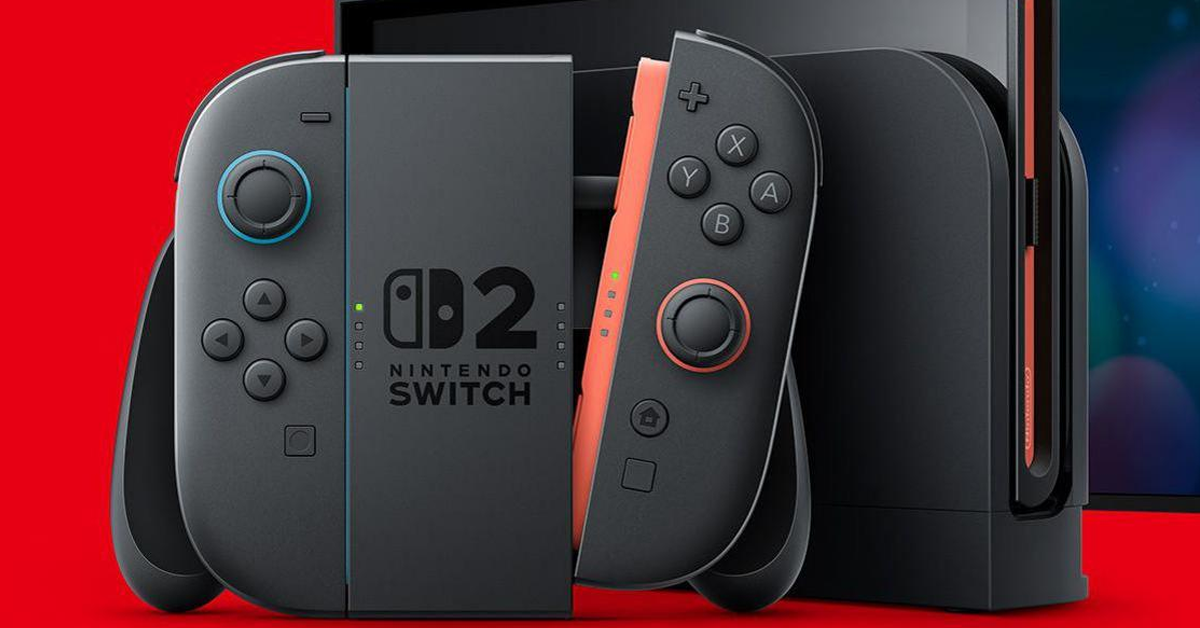
Nintendo just pulled off something no one’s ever done before. In only a few months, the Switch 2 has outpaced the PlayStation 4, PlayStation 5, and even the original Switch in early sales — over 10 million units already in players’ hands. That surge helped Nintendo’s profits more than double year-on-year, marking one of the most successful console launches in history. And yet, what’s fascinating is how they did it. The Switch 2 isn’t a radical new machine. It doesn’t reinvent the way we play games. Instead, it’s a quiet evolution — the most confident, seamless transition Nintendo has ever pulled off.
The Financial Triumph
Behind those sales numbers is a financial story just as impressive. In Nintendo’s latest report, net sales hit 1.1 trillion yen, more than double what they were this time last year, while operating profit climbed 20% to 145 billion yen. Overall, the company’s comprehensive income surged by over 120%, showing how the Switch 2 launch has supercharged every part of Nintendo’s business. What’s especially striking is how global this success is — nearly 80% of sales now come from outside Japan. After years of steady, cautious growth, Nintendo isn’t just surviving another console transition; it’s thriving through it.
Seamless Continuity
The Switch 2’s biggest innovation is that it doesn’t try to be one. Rather than asking players to start over, Nintendo invited them to keep playing — seamlessly. Backward compatibility meant every Switch owner already had a reason to upgrade. Their libraries, their save data, even their habits carried forward. It wasn’t a revolution in hardware design; it was a revolution in comfort. For once, a console launch didn’t feel like the start of something new — it felt like a continuation of something already beloved.
The results were immediate. Mario Kart World, the flagship launch title, sold a staggering 9.57 million units, much of it bundled with the console. Donkey Kong Bananza followed in July with 3.49 million, proving that even outside Mario, the platform had momentum from day one. But the real magic wasn’t in those new releases — it was in the older ones that refused to fade. Mario Kart 8 Deluxe, a game from the original Switch era, and Super Mario Party Jamboree continued selling steadily, boosted by the shared ecosystem. Players didn’t abandon the old console; they simply moved forward together.
That’s what makes this transition so unusual. Historically, console generations split audiences. The NES gave way to the SNES; the Wii U’s identity crisis left millions behind. But the Switch 2 marks a turning point — the first time Nintendo has truly unified its hardware generations instead of replacing them. It’s a single, continuous platform where seven years of software history still matters. It’s as if Nintendo finally solved one of gaming’s oldest problems: how to grow without starting over.
This seamlessness also reshaped the psychology of an upgrade. Buying a Switch 2 doesn’t feel like adopting a risk — it feels like cashing in on loyalty. The interface is familiar, the experience consistent, but everything’s sharper, faster, and more refined. Nintendo designed the Switch 2 less as a successor and more as a natural extension — like the iPhone model that improves just enough to make the last one obsolete. It’s a subtle mastery of iteration, something few console makers have achieved without alienating their core fans.
And in an industry obsessed with spectacle — 8K graphics, AI-powered realism, subscription ecosystems — Nintendo’s quiet continuity stands out. There’s no subscription revolution, no radical new controller, no metaverse ambitions. Just a console that does exactly what players want, only better. In its own understated way, the Switch 2 feels like a statement: that innovation isn’t always about breaking things, sometimes it’s about perfecting them.
Why This Approach Works
This strategy works because it’s built on trust — from both players and developers. The Switch 2 feels instantly familiar, which means fans know exactly what they’re getting, and studios can deliver polished games without having to relearn new hardware. By keeping the foundation steady, Nintendo avoided the pitfalls that doomed the Wii U, when confusion over identity and compatibility fractured its audience. Instead, this time, they’ve kept their massive player base intact. Even as they sold over 60 million Switch-era games in the same period, Nintendo proved that evolution can be more powerful than revolution. It’s a masterclass in stability — a console launch that turned continuity into a competitive advantage.
The Safe Side of Success
But the safer Nintendo plays it, the more it risks losing the spark that made it unpredictable. The Switch 2 is a triumph of refinement, not reinvention — and that’s both its strength and its weakness. For every headline about record-breaking sales, there’s a quiet sense that Nintendo is doing the exact opposite of what made it legendary. Where the Wii redefined how people interacted with games, and the DS reimagined what a handheld could be, the Switch 2 simply improves on a formula that already worked. It’s comfort perfected — and that comfort might be dangerous.
The financials back this up. While hardware and software revenue surged, Nintendo’s digital sales actually fell by 2.8%, and its IP-related business, which includes movies and theme parks, dropped over 12% year-on-year. After the massive cultural moment of The Super Mario Bros. Movie, that decline feels symbolic — as if Nintendo’s broader creative momentum is cooling off just as its core gaming machine heats up. It’s proof that playing it safe may bring stability, but it doesn’t always generate excitement.
What’s fascinating is how deliberate this restraint feels. Nintendo could have chased a bold new concept — a dual-screen hybrid, a VR spin-off, or another experiment like Labo or Ring Fit. Instead, it doubled down on predictability. The company isn’t trying to surprise its audience anymore; it’s trying to reassure them. That’s a subtle but profound shift in philosophy: Nintendo, once defined by risk, now defines itself by reliability. It’s a strategy that would make perfect sense for a tech giant like Apple — but for a company built on wonder, it feels almost un-Nintendo.
And yet, this calculated conservatism isn’t laziness — it’s control. After the Wii U nearly fractured the brand, Nintendo learned the cost of confusing its audience. The Switch 2 is a direct response to that lesson: clear branding, simple messaging, seamless compatibility. It’s the antithesis of the Wii U’s overcomplication. In many ways, Nintendo is correcting its past mistakes by staying within safe territory. But the longer it stays there, the harder it becomes to take another leap.
There’s also a cultural shift happening beneath the numbers. Nintendo’s leadership, now operating in an era of enormous global profitability, seems more interested in sustainability than in revolution. The revised dividend policy introduced this year underscores that — a clear signal to investors that Nintendo has entered a phase of steady, predictable returns rather than explosive experimentation. The company that once gambled on the motion-controlled Wii now acts like a corporation protecting its empire.
None of this diminishes the brilliance of what Nintendo has built. The Switch 2 is arguably the most player-friendly console launch in modern history. But it also feels like a snapshot of a company growing older, more cautious, more aware of its own success. The question isn’t whether Nintendo can keep winning — it’s whether it still wants to take the kind of creative risks that made those wins possible in the first place.
What’s Next
Looking ahead, Nintendo seems determined to keep its momentum steady rather than chase another radical reinvention. The next wave of titles — Pokémon Legends: Z-A, Kirby Air Riders, and Metroid Prime 4: Beyond — are all sequels or extensions of established series, designed to strengthen the Switch 2’s ecosystem instead of redefining it. The company’s updated dividend policy also hints at this mindset: Nintendo isn’t behaving like a studio preparing for disruption, but like a mature entertainment giant planning for consistent, sustainable growth. In many ways, the Switch 2 marks the start of a new era — one where Nintendo isn’t trying to surprise the world, but to keep it playing.
The Switch 2 proves that Nintendo has mastered the art of the transition. It didn’t need a revolution to win — just a perfectly timed evolution. By building on what already worked, Nintendo created the smoothest console handoff in gaming history and turned continuity itself into a selling point. But there’s a quiet irony in that success. The company that once thrived on surprise — that reimagined gaming with the Wii, the DS, and the original Switch — now feels content to refine rather than reinvent. Maybe that’s what this era demands: stability, consistency, and familiarity. Or maybe, somewhere inside this safe success story, the next big creative leap is quietly waiting for its turn.
Leave a Reply