
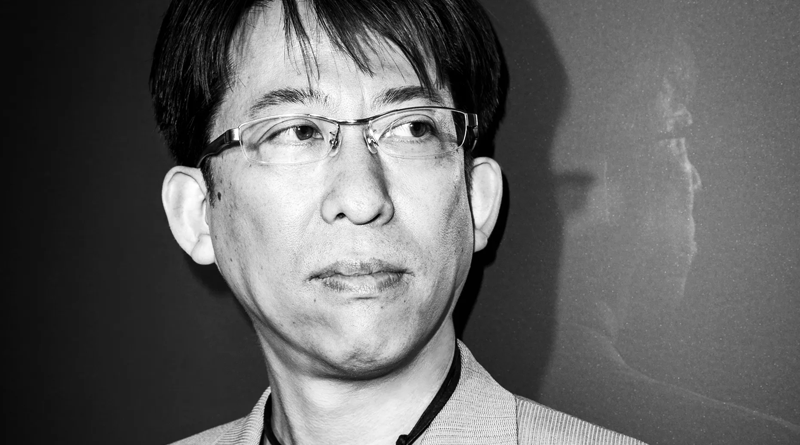
After nearly 40 remarkable years at Nintendo, veteran producer Kensuke Tanabe has reportedly retired—taking with him an extraordinary yet understated legacy woven deeply into Nintendo’s creative soul. Tanabe’s name may not be widely recognised, but his impact is profound: from the audacious leap of Super Mario Bros. 2, the masterful precision of Super Mario Bros. 3, the mythic echoes of classic Zelda, to the revolutionary vision of Metroid Prime and the mischievous heart of Paper Mario. His career doesn’t just reflect Nintendo’s history—it’s a luminous map of how Nintendo found the courage to experiment, to transform, and yet never lose its essential spirit.
To understand why Kensuke Tanabe’s retirement matters, consider his career as a sequence of defining moments—each capturing a different era, risk, and lesson for Nintendo. From shaping Mario’s earliest design language to guiding Luigi into the spotlight, these moments don’t just tell Tanabe’s story. They reflect the story of Nintendo itself.
Pillar One – Super Mario Bros. 2 & Super Mario Bros. 3
Kensuke Tanabe’s career begins at the absolute core of Nintendo’s golden age, working on Super Mario Bros. 2 and Super Mario Bros. 3—two games that couldn’t be more different, yet together explain how Nintendo learned to balance creativity and control. This wasn’t just early career experience. This was Nintendo teaching itself how games should feel, and Tanabe was right there in the room.
Super Mario Bros. 2 was bold in a way Nintendo rarely is. It broke almost every rule the original Mario established: no stomping enemies, multiple playable characters with distinct abilities, and mechanics built around lifting and throwing rather than jumping. As director and course designer, Tanabe helped shape a game that proved something crucial—Mario was strong enough as a character to survive radical experimentation. That lesson would echo throughout Nintendo’s history.
Then came Super Mario Bros. 3, a masterclass in structure and refinement. Where SMB2 was loose and improvisational, SMB3 was meticulously designed. World maps, layered secrets, power-ups with clear risk and reward—all of it taught players how to play without ever stopping the fun. Tanabe’s course design work here was part of Nintendo learning how to guide players subtly, building trust through level design rather than instruction.
Together, these two games illustrate Tanabe’s guiding philosophy: embrace experimentation (as in SMB2) and value structured design (as in SMB3). This tension defined both his later projects and Nintendo’s ability to blend risk and reliability.
Pillar Two – Zelda’s Myth-Making Era
After helping shape not just how Nintendo played but how it felt, Kensuke Tanabe took on a new challenge. As a script writer on The Legend of Zelda: A Link to the Past and The Legend of Zelda: Link’s Awakening, Tanabe’s touch helped breathe emotion into the Zelda series—building a tender, mysterious emotional core that still defines it today.
A Link to the Past established Hyrule as a place of legend rather than exposition. Its story was simple on the surface, but heavy with implication: an ancient war, a fallen hero, and a kingdom shaped by events long before the player arrives. Tanabe’s script work helped give Zelda a sense of history and melancholy, allowing the world to feel older and more meaningful without ever overwhelming the player with dialogue.
Link’s Awakening carried that magic further. Far from Hyrule, the game dared to be surreal, quietly bittersweet, and intimately personal—laying bare the adventure’s heart and questioning its very meaning. This rare, haunting story lingered long after the credits faded. Tanabe’s presence is felt here in the trust the game puts in its own strangeness, emotion, and vulnerability.
These Zelda entries highlight Tanabe’s shift from gameplay to narrative, teaching Nintendo to convey story through atmosphere rather than instruction. His influence enabled future games—like Metroid Prime and Paper Mario—to blend mood with mechanics from this foundation.
Pillar Three – Metroid Prime
If there is a single project that defines Kensuke Tanabe’s legacy, it’s Metroid Prime. This was Nintendo taking one of its most atmospheric, most protective franchises—and doing something that could have gone catastrophically wrong. A first-person Metroid. Built by a Western studio. At a time when Nintendo rarely trusted anyone outside its walls with something this important.
As a co-producer, Tanabe served as the bridge between Nintendo and Retro Studios. His role wasn’t to impose a rigid vision, but to safeguard Metroid’s identity: the loneliness, the environmental storytelling, the sense that the world itself is the narrative. The result wasn’t just a successful transition to 3D—it was a redefinition of what Metroid could be, and a blueprint for how Nintendo could evolve without abandoning its core values.
What makes Tanabe’s influence even more remarkable is how long it lasted. He didn’t just help launch Metroid Prime—he shepherded the series for decades, overseeing sequels, remasters, and ultimately guiding the franchise toward its long-awaited next chapter. Few Nintendo producers have been entrusted with a single series for that long, and fewer still have left it stronger than when they found it.
This pillar marks Tanabe’s biggest risk: guiding Metroid Prime as it evolved through new perspectives, technology, and international collaboration—without losing its soul. He ensured Nintendo could reinvent a core series while honouring its origins.
Pillar Four – Paper Mario
With Paper Mario: The Thousand-Year Door, Kensuke Tanabe returned to Mario—but not to comfort. Paper Mario became a space where Nintendo could bend genre rules, poke fun at itself, and experiment in ways the mainline series never would. It was bright, funny, self-aware, and surprisingly emotional, blending traditional RPG mechanics with sharp writing and fourth-wall breaks that felt almost rebellious for Nintendo at the time.
The Thousand-Year Door is often remembered as the high point of the series, and for good reason. It struck a rare balance between mechanical depth and personality, letting Mario exist in a world that felt strange, sarcastic, and occasionally dark. Under Tanabe’s supervision, Paper Mario proved that Nintendo’s most recognisable character could carry something far more unconventional without losing his charm.
What defines this pillar, though, is what came after. Later Paper Mario entries moved away from traditional RPG systems, focusing instead on puzzles, visual identity, and mechanical reinvention. These shifts were controversial, but they were consistent with Tanabe’s long-standing philosophy: Mario should be allowed to evolve, not fossilise. Paper Mario was never meant to stand still.
This pillar shows Tanabe as a creative instigator—someone willing to challenge expectations, even when it risks backlash. Just as Super Mario Bros. 2 did 2 decades earlier, Paper Mario reflects his belief that familiarity can be a shield against experimentation. Love every decision or not, the series was never afraid to try something new—and that courage came from the top.
Pillar Five – Luigi’s Mansion
Late into his career, Kensuke Tanabe played a key role in shaping the modern identity of Luigi’s Mansion, a series that quietly became one of Nintendo’s most reliable and beloved. Where earlier pillars were about invention and reinvention, Luigi’s Mansion represents refinement—Nintendo knowing exactly what it wants to be, and executing it with confidence.
Across entries like Dark Moon and especially Luigi’s Mansion 3, Tanabe helped guide the series into a polished, expressive experience built around atmosphere, animation, and playful problem-solving. Luigi himself evolved from comic relief into a genuine lead, with fear and personality becoming strengths rather than jokes. The games were welcoming, but never shallow—carefully designed to appeal to newcomers without losing Nintendo’s trademark cleverness.
This pillar is timely. After decades of innovation, Luigi’s Mansion shows Tanabe at his most assured. These games didn’t need to redefine Nintendo—they simply represented it at its best, selling millions and earning praise without seeking the spotlight.
Luigi’s Mansion serves as Tanabe’s capstone, reflecting mastery in refinement rather than reinvention. Here, he showed that sometimes excellence comes from focus and polish, letting creativity shine through confidence and execution.
Looking at Kensuke Tanabe’s career, what stands out isn’t just the volume of projects but his placement at critical moments. From shaping Mario’s design to refining Luigi’s Mansion, Tanabe’s work traces Nintendo’s creative journey across four decades.
He wasn’t the loudest voice in the room. He didn’t chase attention. Instead, he earned trust—over and over again. And at Nintendo, trust is everything. Tanabe helped the company evolve without losing its identity, proving that experimentation and tradition don’t have to be opposites. Sometimes, they need each other.
If you enjoyed this deep dive and want more thoughtful coverage of Nintendo’s history, future, and the people behind the games, make sure you’re subscribed to Power Up Direct. We’ll be covering everything from Switch 2 and upcoming releases to retrospectives like this—celebrating the creators who quietly shaped the games we love.
Drop a comment below with your favourite Kensuke Tanabe–produced game, and let us know which Nintendo figure you’d like us to spotlight next. Thanks for watching, and we’ll see you in the next one.
Leave a Reply