
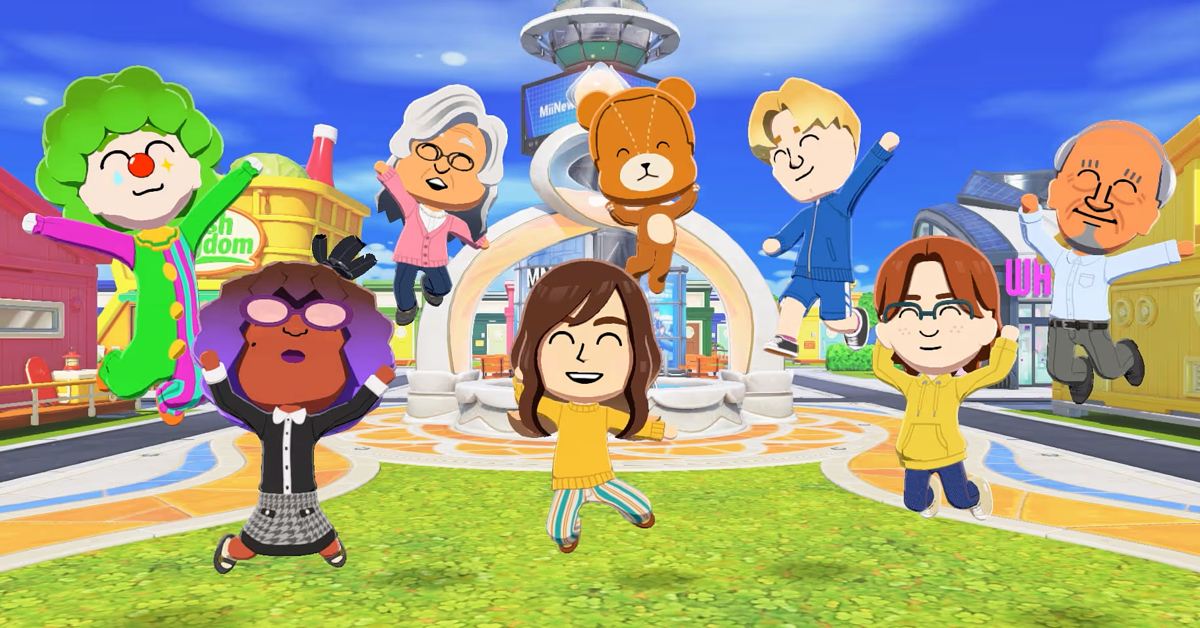
Nintendo doesn’t typically revisit its strangest ideas, making Tomodachi Life: Living the Dream a surprising comeback. This franchise was never about blockbuster appeal or competitive gameplay; it thrives on uniqueness, unpredictability, and a disregard for typical gaming conventions. Yet its return is perfectly timed, as the gaming world now values exactly what makes Tomodachi Life different.
The original Tomodachi Life was one of Nintendo’s most unusual success stories. It sold millions despite having no traditional structure. There were no levels, enemies, or an end goal. Instead, players created a cast of characters and observed what unfolded—relationships, arguments, evolving friendships, and pure randomness formed the core experience.
What once felt like a novelty now seems essential. Player engagement has shifted to valuing shared, unscripted, and emergent experiences—precisely the foundation of Tomodachi Life. Its return is evidence that the industry now embraces the unpredictable charm that defines the game.
What is Tomodachi Life actually about
At its core, Tomodachi Life is about building a world and then letting it evolve without direct control. You begin by creating Miis, shaping their appearance, personality, voice, and quirks. These characters can represent real people, fictional icons, or completely absurd creations. Once placed on your island, they begin interacting with each other in ways that feel organic but often spiral into complete chaos.
The game is compelling because of its interactions: a Mii might confess love and be hilariously rejected, friends may fall out over trivialities, or some may ask for outfit advice or help with problems. Sometimes, the entire island breaks into a spontaneous musical performance, disconnected from reality.
There are also dream sequences, which push the game into even stranger territory. These moments are often surreal, unpredictable, and deliberately nonsensical, reinforcing the idea that this is not a simulation grounded in realism, but one built around entertainment and surprise.
Unlike other life simulators, you don’t control every action; you guide and react. This perspective shift makes the game feel like a social experiment, where the true reward is watching what happens next.
Why Living the Dream could explode on Switch
The move to Switch fundamentally changes the potential scale of Tomodachi Life. The original game was successful, but it was constrained by the 3DS ecosystem. Now, it has access to a vastly larger audience, including players who may have never experienced the series before.
More importantly, the cultural context has shifted. Today’s gaming audience is deeply connected to content creation platforms like YouTube and TikTok, as well as streaming services. These platforms reward spontaneity, humour, and unexpected moments — all things Tomodachi Life generates naturally without requiring scripting or setup.
Players experience something funny or bizarre, share it online, and that moment becomes organic marketing. Unlike traditional games that rely on curated highlights, Tomodachi Life thrives on randomness. Every clip feels unique, which makes it more engaging to watch and share.
Early previews suggest Living the Dream expands customisation and presentation, with more detailed Miis, improved animations, and a more expressive world. If sharing or visiting islands becomes easier, the game could become a social platform as much as a simulation.
The demo reactions are already telling a story
Early demo reactions provide a strong indication of how this game will be received, particularly among players encountering it for the first time. One of the most common responses is confusion — but in a positive way. Players quickly realise that this isn’t a game you “beat” or optimise. It’s something you observe, interact with, and gradually understand.
Players start to experiment, creating different types of characters just to see how they behave. They begin to anticipate interactions, checking back in to see how relationships have developed or what new situations have emerged. The engagement comes not from progression, but from unpredictability.
For returning players, the demo taps into nostalgia while also offering something new. The humour, awkward timing, and strange scenarios remain intact, but they’re now presented with modern visuals and smoother systems. It feels familiar, but not outdated.
The most important takeaway is how naturally the game creates memorable moments. Players don’t need to look for something interesting—it just happens. That’s powerful in a content-driven landscape where attention is everything.
Nintendo’s secret weapon: unpredictability
Nintendo has always stood apart by embracing ideas that other developers might avoid, and Tomodachi Life is one of the clearest examples of that philosophy. It doesn’t try to compete on technical depth or scale. Instead, it focuses entirely on creating systems that produce interesting outcomes.
Unpredictability is central. You can influence your island, but not fully control it. This balance creates constant discovery—new relationships, sudden arguments, or bizarre events each time you check in.
This approach removes the pressures of modern gaming: no need to optimise strategy, grind for resources, or compete. The result is a relaxed, open-ended experience driven by curiosity—not obligation.
In a market full of vast worlds and competition, Tomodachi Life’s simplicity is its strength. It offers something lighter, more accessible, and more personal—focusing on enjoying the moments it creates rather than mastering the game.
Final thoughts – A sleeper hit in the making?
Tomodachi Life: Living the Dream might not have the same immediate impact as Nintendo’s biggest franchises, but it has the potential to grow into something just as significant over time. The original game demonstrated that there’s a strong audience for this kind of experience, and the current environment is even more favourable.
With a larger install base, stronger sharing culture, and a concept that generates engaging content, the conditions are right for this to succeed. It relies on creativity, humour, and unpredictability rather than competition or progression.
That makes it difficult to categorise, but also easy to connect with. Players don’t need to learn complex systems or invest dozens of hours before enjoying it. The key takeaway is that accessibility and variety are at the core of its lasting charm.
If Nintendo focuses on features and visibility that highlight the game’s originality, Tomodachi Life: Living the Dream could become one of the most-discussed titles. Not by imitating trends, but by owning its unique approach.
In today’s gaming landscape, genuine difference is rare—and Tomodachi Life’s return may be exactly what sets it apart for success.
Leave a Reply